The Hidden Connection Between Gut Wellness and Everyday Energy
Most people associate energy with sleep, exercise, or nutrition. While these factors are important, there is another piece of the wellness puzzle that often receives less attention: digestive wellness.
The way we feel after meals can influence our productivity, focus, comfort, and overall daily experience. This is why more people are beginning to view digestive wellness not as a separate health goal, but as an essential part of everyday living.
Have You Ever Noticed the Difference?
Think about two different meal experiences.
In the first, you finish eating and feel comfortable, light, and ready to continue your day.
In the second, you feel sluggish, heavy, or less motivated to remain active.
The food may have been enjoyable in both situations, yet the experience afterward can feel completely different.
This difference often influences how productive, focused, and comfortable we feel throughout the rest of the day.
Modern Life Demands Consistent Energy
Today's lifestyles rarely slow down.
Most people move directly from one responsibility to another:
Morning routines
Work meetings
Family commitments
Social activities
Travel schedules
Evening responsibilities
In such an environment, feeling comfortable after meals becomes increasingly valuable.
People are not just looking for food that tastes good. They want meals that help them maintain balance throughout the day.
Why Digestion Matters Beyond Mealtime
Digestion is one of the body's most important daily processes.
Every meal requires the body to process nutrients, manage energy resources, and maintain internal balance.
When meal habits become irregular, rushed, or inconsistent, many people begin paying closer attention to their digestive wellness.
This awareness has led to a growing interest in mindful eating, balanced meal routines, and simple daily wellness habits.
The Importance of Meal Timing
One common challenge in modern life is irregular meal timing.
Skipping breakfast, eating lunch late, or having heavy dinners after long workdays has become increasingly common.
While occasional schedule changes are unavoidable, establishing a more consistent eating pattern can help create a more comfortable relationship with food.
Simple routines often create lasting benefits.
Small Habits Create Big Results
Many wellness experts agree that long-term success often comes from small, sustainable actions rather than dramatic changes.
Some examples include:
Eating at regular times
Taking time to enjoy meals
Staying hydrated
Walking after meals
Choosing balanced food options
Avoiding unnecessary rushing while eating
These habits may appear simple, but their impact often becomes noticeable over time.
Food Is More Than Nutrition
Meals are not only about calories and nutrients.
Food is connected to family, celebration, culture, travel, friendship, and daily enjoyment.
A healthy relationship with food means being able to enjoy these experiences while maintaining balance and comfort.
The goal is not restriction. The goal is mindful enjoyment.
Creating a Sustainable Wellness Routine
One reason people struggle with wellness routines is complexity.
Complicated schedules, difficult instructions, and unrealistic expectations often become hard to maintain.
Simple habits are easier to follow consistently.
When wellness naturally fits into everyday life, it becomes part of a routine rather than another task on a checklist.
The Role of Everyday Digestive Wellness
More people are beginning to understand that digestive wellness is not only something to think about when discomfort occurs.
Instead, it can be viewed as an ongoing part of maintaining a balanced lifestyle.
Supporting digestive comfort through mindful habits allows people to focus on what matters most—family, work, travel, celebrations, and everyday experiences.
Final Thought
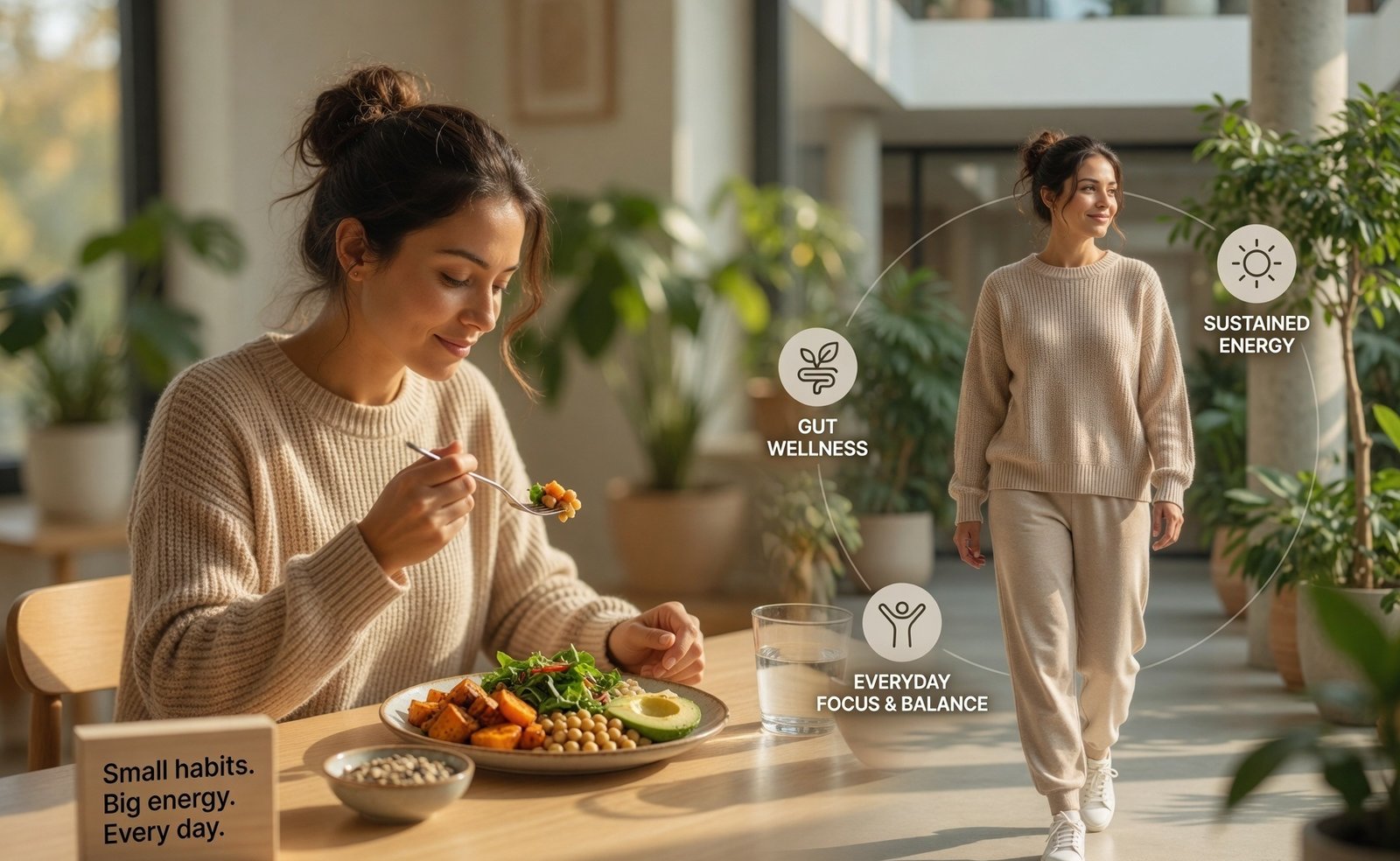
Energy is not only about how much sleep you get or how much exercise you do. It is also influenced by how comfortably your body processes the food you eat every day.
By paying attention to meal habits, digestive wellness, and simple daily routines, it becomes possible to create a more balanced relationship with food and a more comfortable experience throughout the day.
Because when digestion feels better, life often feels better too.